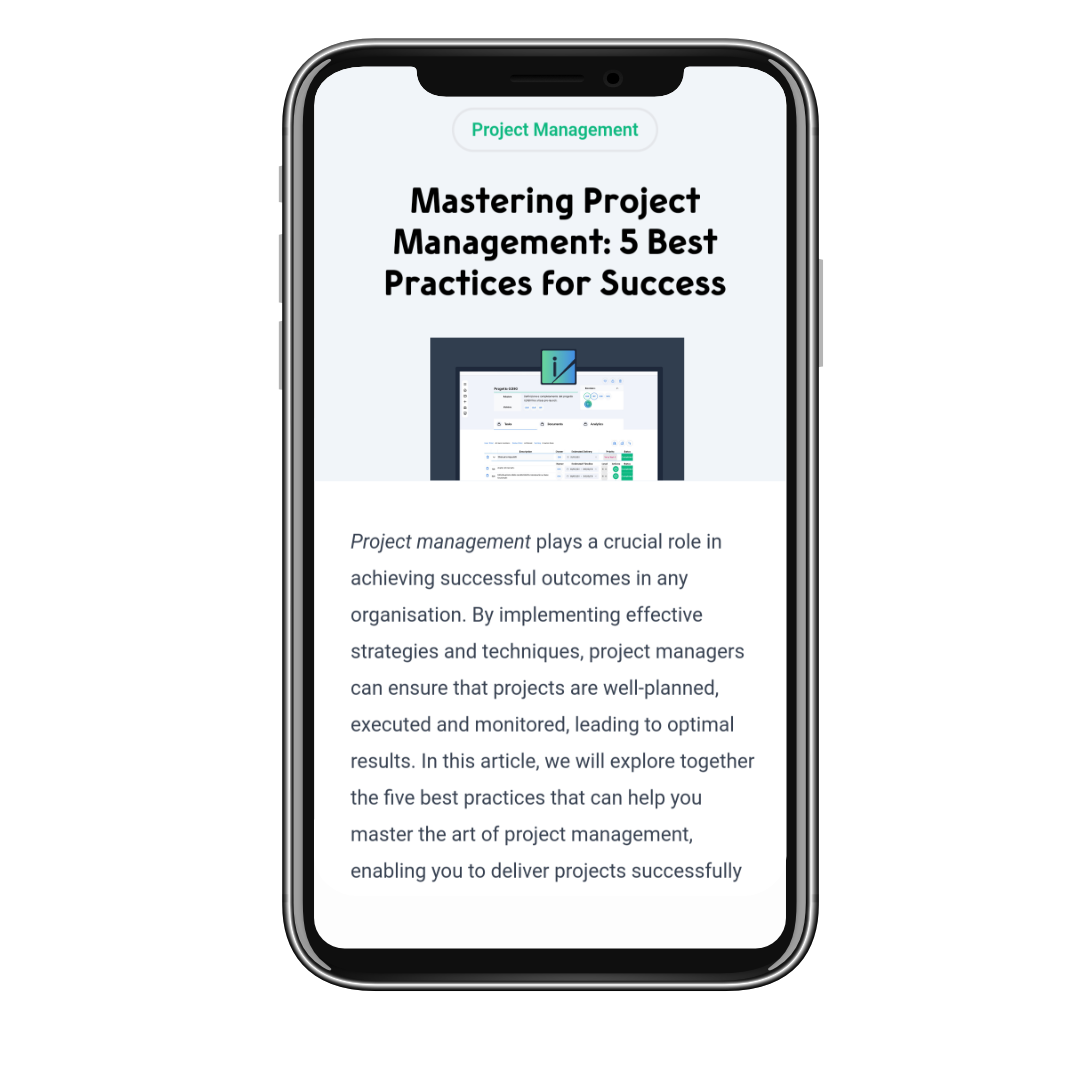
Project management serves as the strategic discipline that coordinates people, processes, and resources to deliver specific objectives within defined constraints of time, budget, and scope. Every organisation, regardless of size or industry, relies on effective project management to transform ideas into tangible results whilst maximising efficiency and minimising waste.

Yet despite its fundamental importance, countless businesses struggle with scattered tools, unclear processes, and alarming failure rates that drain resources and stifle growth. We’ve observed how companies lose millions annually due to poor project coordination, whilst others achieve remarkable success through unified systems and strategic approaches.
Understanding the true cost of ineffective project management becomes crucial when we examine real-world statistics and case studies that reveal both the hidden bottlenecks plaguing modern organisations and the transformative potential of implementing proper project management frameworks. The difference between project chaos and project success often lies in recognising the warning signs early and taking decisive action.
The Staggering Statistics of Project Failure Rates Across Industries
Project failure statistics reveal a concerning pattern that affects organisations worldwide. Most organisations experience a 70% project failure rate, with poor project management being the primary culprit.
Only 2.5% of companies successfully complete 100% of their projects according to research spanning 200 companies across 30 countries. This statistic highlights how challenging it is to maintain consistency throughout the project lifecycle.
Strategic alignment presents another significant challenge. Just 42% of organisations align their projects with organisational strategy, directly impacting project sponsors and stakeholders who depend on clear project goals.
Large-scale projects face even higher failure rates. Projects with budgets exceeding £750,000 fail nearly 50% more often than smaller initiatives, often due to complications during project execution and inadequate project planning.
| Industry Focus | Failure Rate |
|---|---|
| Construction | 90% experience cost overruns |
| General Business | 70% overall failure rate |
| IT Projects | 75% lack confidence from project initiation |
Communication breakdowns cause 57% of project failures, affecting project team members and stakeholders throughout project execution. This often stems from inadequate project charters that fail to establish clear communication protocols.
Project planning deficiencies contribute significantly to these statistics. Three-quarters of respondents admit their projects are “doomed from the start,” often because project management plans lack proper structure during project initiation.
The construction industry faces particular challenges, with nine out of ten projects experiencing cost overruns due to design changes, poor estimation, and inadequate project closure processes.
How Scattered Tools and Processes Create Invisible Bottlenecks

We often create invisible bottlenecks without realising it when our project management tools exist in isolation. These hidden constraints slip past standard performance metrics and evade detection.
Tool Fragmentation Issues:
- Timesheets stored in one system whilst project monitoring happens in another
- Kanban boards disconnected from resource planning tools
- Communication platforms separate from project management software
When our project management methodologies rely on multiple disconnected systems, information gets trapped in silos. Team members waste time switching between platforms and manually transferring data.
Common Invisible Bottleneck Scenarios:
| Scenario | Hidden Impact |
|---|---|
| Separate timesheet and project tools | Delayed resource allocation decisions |
| Isolated communication channels | Critical updates lost in translation |
| Disconnected approval workflows | Tasks queued without visibility |
We encounter workflow delays when project data cannot flow seamlessly between systems. A task might appear complete on our kanban board but remain stuck awaiting approval in a separate system.
Manual data entry between scattered tools creates additional friction points. Team members spend valuable time reconciling information across platforms instead of focusing on actual project work.
The cumulative effect becomes a productivity drain that’s difficult to measure. We lose efficiency not through obvious blockages, but through countless micro-delays caused by fragmented processes.
Project management software integration helps eliminate these invisible constraints by creating unified workflows where information flows naturally between different project functions.
Real Case Studies of Companies That Transformed Their Project Success Rates
Tesla revolutionised its project management approach during the Model 3 production crisis. The company initially faced massive production delays and quality control issues that threatened its market position.
Tesla implemented agile project management methodologies, increasing manual intervention whilst strengthening supply chain partnerships. This transformation enabled them to scale production effectively and meet consumer demand.
| Company | Challenge | Solution | Result |
|---|---|---|---|
| Tesla | Production delays, quality issues | Agile methodologies, supply chain optimisation | Scaled production, improved profitability |
| Apple | Complex iPhone integration challenges | Innovation-driven design, phased development | Market leadership in smartphones |
| CERN | International coordination complexity | Global collaboration protocols, risk management | Successful Higgs boson discovery |
Apple’s iPhone project demonstrates exceptional transformation in managing complex technology integration. The company overcame tight timelines and supplier coordination challenges through systematic development phases.
Their approach included:
- Innovation-driven design processes
- Step-by-step development methodology
- Efficient global supplier coordination
CERN’s Large Hadron Collider project showcased how international scientific organisations can transform project success rates. They managed over 10,000 scientists across multiple countries whilst maintaining rigorous safety protocols.
These transformations highlight essential elements for project management career development. Companies that embrace structured methodologies, stakeholder engagement, and adaptive planning consistently achieve better outcomes than those using traditional approaches.
The ROI of Implementing a Unified Project Management System
Calculating the return on investment for a unified project management system requires systematic analysis of both tangible and intangible benefits. We must consider direct cost savings from improved efficiency, reduced project failures, and enhanced resource allocation.
Key ROI Components:
| Category | Benefits | Measurement |
|---|---|---|
| Time Savings | Reduced project duration | Percentage improvement in delivery times |
| Cost Reduction | Lower operational expenses | Actual savings versus baseline costs |
| Quality Improvement | Fewer defects and rework | Reduction in project failure rates |
Research indicates that organisations with mature project management practices achieve higher success rates. The Project Management Institute studies show that companies with proven methodologies complete 89% of projects successfully compared to 36% without structured approaches.
Investment costs include training programmes for Project Management Professional (PMP) and Certified Associate in Project Management (CAPM) certifications. These project management certifications ensure teams utilise standardised practices effectively.
We can measure ROI through Monte Carlo simulations that compare project outcomes with and without unified systems. This approach accounts for multiple variables including schedule, budget, and benefit variations across different confidence levels.
The influence of external factors must be considered when attributing benefits solely to the unified system. Market changes, economic conditions, and organisational restructuring can impact results independent of project management improvements.
Organisations typically see positive ROI within 12-24 months when implementing comprehensive project management systems with proper change management support.
5 Warning Signs Your Current Project Management Is Costing You Money
Poor project management systems drain our budgets without us realising it. We often focus on direct costs whilst overlooking the hidden expenses that ineffective processes create.
1. Projects Consistently Exceed Budget
When our project budget regularly overruns by 10% or more, we’re losing money on every job. Cost overruns typically stem from inadequate planning, poor estimates, or lack of real-time visibility into expenses.
2. Resource Allocation Problems
We waste money when team members sit idle or work overtime unnecessarily. Poor resource allocation leads to:
- Overstaffing on low-priority tasks
- Understaffing critical deliverables
- Excessive overtime payments
- Missed deadlines requiring costly rush work
3. Administrative Time Drain
If our team spends more than 20% of their time on project administration, we’re paying for inefficiency. Manual reporting, duplicate data entry, and searching for project information costs us productive hours.
4. Repeated Scope Changes
Frequent scope modifications indicate weak initial planning. Each change order requires additional resources, extends timelines, and often reduces overall profitability.
5. Lack of Historical Data Access
When we cannot quickly review past project costs and timelines, we repeatedly make the same expensive mistakes. Without historical insights, our estimates remain inaccurate, leading to underpricing and profit loss.
These warning signs compound over time, creating a cycle where poor project management becomes increasingly expensive for our organisation.
Conclusion
The evidence is unequivocal: scattered project management practices represent a significant and often underestimated threat to organisational profitability and competitive advantage.
With 70% of projects failing across industries and billions lost annually to inefficient processes, the cost of maintaining fragmented systems far exceeds the investment required for comprehensive reform.
The transformation stories of Tesla, Apple, and CERN demonstrate that even the most complex organisations can achieve remarkable success through unified project management approaches and strategic implementation of proven methodologies.
For forward-thinking organisations, the question is no longer whether they can afford to invest in integrated project management systems, but rather whether they can afford not to.
By recognising the warning signs early and taking decisive action to consolidate tools, streamline processes, and foster collaborative workflows, businesses can transform operational chaos into a sustainable competitive advantage that drives long-term growth and success.